


Hoodia Gordonii for Weight Loss: Does It Really Work? A UAE Buyer’s Guide

If you’ve spent any time browsing weight-loss supplements, you’ve probably come across Hoodia Gordonii. It’s one of the more talked-about natural appetite suppressants on the market — but between bold marketing claims and genuine skepticism, it can be hard to know what’s actually true. Here’s a straightforward look at what Hoodia is, what the evidence says, and what to consider before adding it to your routine.
What Is Hoodia Gordonii?
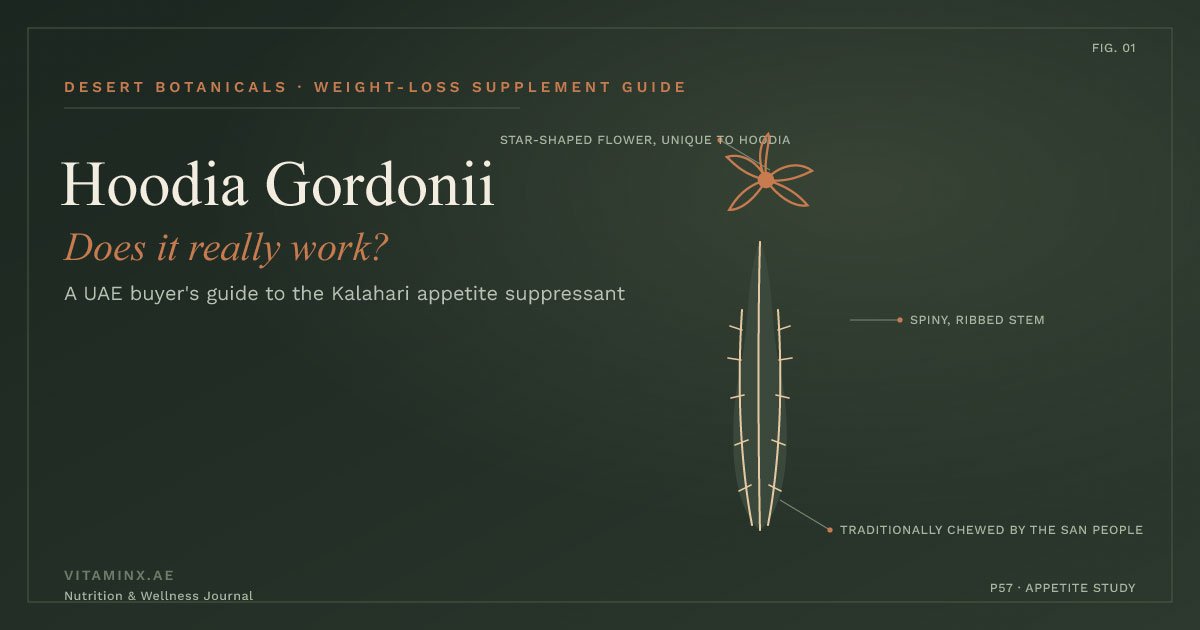
Hoodia Gordonii is a succulent plant native to the Kalahari Desert in Southern Africa. For generations, local San tribespeople reportedly chewed the plant’s stem during long hunting trips to stave off hunger and thirst. That traditional use is what first caught the attention of the global supplement industry, and by the early 2000s Hoodia had become one of the most searched-for weight-loss ingredients worldwide.
The plant contains a compound often referred to as P57, which researchers have theorized may act on the brain’s hunger signals — though the science here is still limited, more on that below.
How Is It Supposed to Work?
The core claim behind Hoodia is appetite suppression. The idea is that it may help the brain register a feeling of fullness, which in theory could lead to:
- Reduced calorie intake throughout the day
- Fewer cravings between meals
- Easier portion control
Unlike stimulant-based diet pills, Hoodia is typically marketed as non-stimulant, meaning it’s not supposed to work through caffeine-like energy spikes or increased heart rate.
What Does the Evidence Actually Say?
This is the part worth being honest about. While Hoodia’s traditional use is well documented, rigorous human clinical research is still limited. A handful of small studies have looked at Hoodia’s effects on appetite and calorie intake, with mixed and inconclusive results. Larger, well-controlled trials are lacking, and much of what circulates online is anecdotal rather than clinically proven.
That doesn’t mean Hoodia is ineffective — it means the science hasn’t caught up to the popularity. If you’re trying it, it’s reasonable to treat it as a potential support tool rather than a guaranteed solution, and to pair it with the fundamentals: a balanced diet, regular activity, and consistent habits.
What to Look for When Buying Hoodia in the UAE
Because Hoodia became so popular, the supplement market has seen its share of diluted or fake products — some containing little to no actual Hoodia extract. When shopping in the UAE, a few things are worth checking:
- Species accuracy: Only Hoodia Gordonii has the studied compounds; other Hoodia species don’t carry the same reputation.
- Sourcing and certification: Look for products that reference CITES certification, since Hoodia is a protected plant and legitimate exporters must comply with international trade regulations.
- Transparent labeling: A trustworthy product will state the extract concentration and capsule dosage clearly.
- Retailer reputation: Buy from sellers who ship with proper storage and packaging, rather than unverified marketplace listings.
Who Should Be Cautious
Hoodia isn’t right for everyone. It’s generally not recommended for:
- Pregnant or breastfeeding women
- People with diabetes or blood sugar conditions (Hoodia may interact with blood sugar regulation)
- Anyone currently taking prescription medication, without first checking with a doctor
- People with liver or heart conditions
As with any supplement, it’s a good idea to speak with a healthcare provider before starting Hoodia, especially if you have an existing health condition or take other medications.
The Bottom Line
Hoodia Gordonii has an interesting traditional history and a loyal following, but the clinical evidence behind it is still thin. It’s best approached as one possible piece of a broader weight-management routine — not a shortcut on its own. If you do decide to try it, prioritize authentic, properly sourced products and keep expectations realistic.
This article is for informational purposes only and is not a substitute for professional medical advice. Always consult a healthcare provider before starting any new supplement.